
Service Areas
General Contractor in Cypress, Texas
Along US 290 northwest of Houston, big-box distribution and master-planned mixed-use are being built side by side, and we deliver both: million-square-foot logistics shells on one end of the job list and town-center retail, sports and office on the other. The common thread is infrastructure. Before a Cypress building can open, someone has to move earth, route storm water, extend utilities and coordinate with the districts that serve the land. Our site development and utilities teams carry that burden so the vertical construction can start on a prepared pad.
The scale of recent activity is documented. In April 2025 the West Houston Association described the 290 corridor as continuing a strong growth trajectory, noting a 5 million-square-foot facility at Legacy Point, a 2.3 million-square-foot Northwest 99 Business Park and the final phase of Cypress Business Park under way. A park measured in millions of square feet is a series of buildings delivered in sequence, and the contractor that earns repeat work is the one that keeps the site moving between them.
Cypress is about 24 miles northwest of downtown Houston by way of US 290, which sets the logistics of every concrete truck and steel delivery we schedule.
Two kinds of growth in one corridor
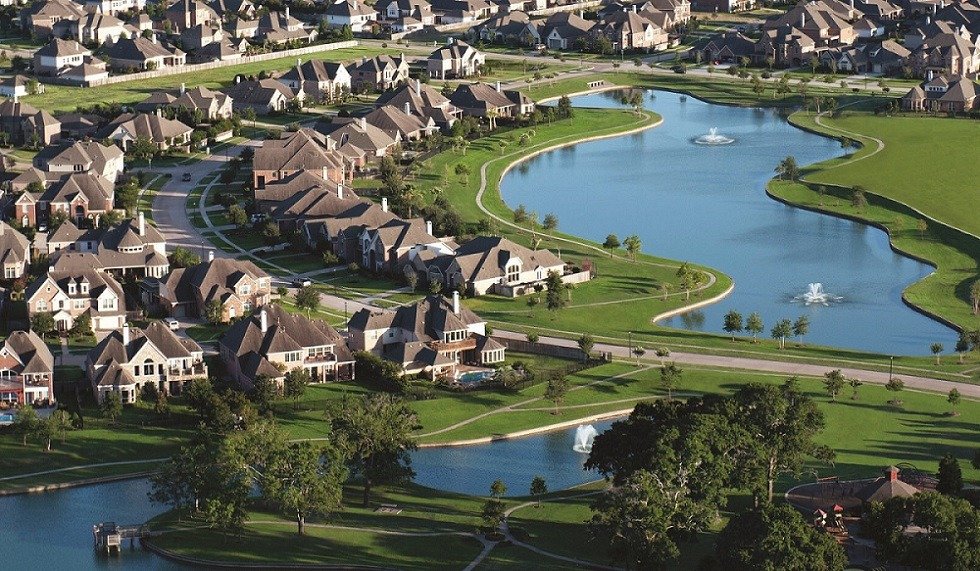
The industrial story gets most of the attention, but the mixed-use story is just as important. In February 2026 The Real Deal reported a proposed 83-acre Toro District in Bridgeland, a master-planned community between US 290 and I-10, with 22 acres for a professional football team's headquarters, indoor training facilities and practice fields, an arrangement approved unanimously by Harris County commissioners. Whatever the final form, a development of that kind draws hotels, restaurants, medical offices and housing within a short radius.
For a developer, the question is sequencing: which uses open first, and which parcels need infrastructure ahead of the pad. We help answer that with phased budgets that show roads, utilities and detention costs alongside vertical construction. Our mixed-use construction practice is set up to deliver retail and office first, followed by apartments or hospitality as the market firms up.
Buildings we deliver in the Cypress area
The most common request is large-format distribution or fulfillment space, with deep truck courts, wide bays and plentiful trailer parking. We handle those through fulfillment and logistics center construction, using tilt-wall panels for most shells and metal buildings for smaller or more specialized users. Next come retail pads, restaurants and medical office space serving surrounding neighborhoods.
The master-planned communities in the area also use schools, clinics and civic buildings, and we bring our education facility construction experience to them in the same careful, phased way. A school or clinic has hard opening dates, and the construction plan has to respect them.
Work we manage most closely
On a distribution park, we schedule and supervise the site grading, stabilization, concrete flatwork and truck court paving closely. Those are the trades where field decisions matter most and where a missed hour can cost a day. We also manage the tilt panels and structural slab on grade, with specialty subcontractors for roofing, glazing and mechanical systems.
For an owner, one supervising team means a single chain of responsibility. When a subgrade issue appears, there is no handoff and no debate over who pays to look at it. We find the cause, correct it and document it for the record, and the owner sees the finding in the next weekly report.
Understanding the real cost of a Cypress pad
Pad cost in this market includes more than the building. Fill, detention, storm sewer, water and sanitary extensions, roads and paving can equal or exceed vertical construction on a large industrial site. We prepare budgets that separate site cost from building cost, and we show per-acre and per-square-foot figures so a developer can compare parcels.
Soil and subsidence also affect cost. Harris-Galveston Subsidence District data cited in a May 2026 news report lists Cypress among areas with measurable land subsidence from groundwater withdrawal. We include a geotechnical review in preconstruction, and we design utility connections and slab details to tolerate some movement. The expense of doing so is small compared with the cost of a corrective slab repair.
Sequencing a multi-building park
A park with several buildings is built like a small city. We stage the work so roads, storm sewer and detention come first, then the first building pad, then utilities for the next phase while the first building is under roof. That overlap is where schedule is won: the second building pad is graded while the first building is being fitted out, so no crew waits for the site.
The Grand Parkway also shapes delivery. TxDOT describes Segment E as a 15.2-mile controlled access toll road ending at US 290 near Cypress, and tenants who lease space care about the reach it gives them toward I-10. For us, it means material routes and worker commutes are better than they once were, and it lets us run second shifts on key activities without choking local streets.
Running a large site safely
Mega-sites bring many trades at once. We maintain a site logistics plan that controls traffic, separates pedestrians from equipment and schedules deliveries by hour. Daily huddles, equipment inspections and clear hot-work rules are routine, and our superintendents walk the site frequently to look for problems before they become incidents.
Heat is another safety factor on the Gulf Coast. We plan hydration, shade and rest cycles for outdoor crews, and we adjust pour and paving schedules to cooler hours in summer. These practices protect workers and also protect concrete quality, which suffers when mixes are placed in extreme heat.
Nearby submarkets and buyer groups
Developers in Cypress often compare it with Katy to the south and The Woodlands and Conroe to the north. Each has its own soil, utility districts and tenant mix, and we price them with market-specific assumptions rather than an average.
Our clients include commercial real estate developers, who value early budget certainty, and users who plan a build-to-suit facility. We offer a preconstruction agreement that lets a developer test a site and a building concept before committing to a lump-sum contract, and we publish firm numbers as the design matures.
Price the whole pad, not just the box
Send us the acreage and the tenant program. We will return a site-and-building budget and a phasing plan with the utility dependencies marked.
Common Questions
How far in advance should a Cypress industrial project start site work?
As early as the permits allow. Earthwork, detention and utilities are the longest part of many projects, and weather affects them directly. Starting early lets the vertical construction begin on a prepared pad and gives the owner a more reliable occupancy date.
Does subsidence affect building design in Cypress?
It affects planning and details. Reported subsidence in the area means a geotechnical review is wise, and utility connections and slab details should tolerate some movement. The specific measures depend on the parcel and the engineer.
Can you build retail and office in a master-planned community?
Yes. We coordinate with the design standards of the community and the phasing plan of the developer, and we deliver pads, shells and finish-outs to match. Aesthetic standards can affect cost, so we review them at the start of pricing.
What is the advantage of a preconstruction agreement?
It lets the developer and contractor test the site, develop a budget and refine the schedule before committing to a full contract. It often exposes site risks early, when they are cheaper to address, and gives the owner firm numbers as design matures.
How do you handle summer heat on concrete work?
We schedule pours for cooler hours, use mix designs suited to hot weather, and have curing plans ready. We also plan crew hydration and rest. Careful planning protects both people and the finished slab.