
Service Areas
General Contractor in Tomball, Texas
Retail developers and industrial owners at Highway 249 and the Grand Parkway need a builder who can keep a store, a warehouse and a public road moving at the same time, which is what we do in Tomball. The corner is a working example of how a suburban crossroads becomes a regional destination: shopping centers, distribution buildings and road widening all share the same intersections, and the person managing the construction has to coordinate with all three.
Two projects reported in the press show the range. Community Impact reported in March 2022 that the 240-acre Interchange 249 industrial project broke ground southwest of the intersection, planned as 10 buildings totaling more than 3 million square feet in three phases, with the first phase including a building of more than 900,000 square feet for a national retailer. The Greater Houston Partnership reported in October 2023 that The Grand at 249, a $90 million retail center on a 65-acre site at the southwestern corner, would span 404,256 square feet and be the largest retail concentration in the northwest submarket, set for completion by 2025.
We build both kinds of work. Our retail shopping center construction teams deliver pads, in-line space and the parking fields around them, and our industrial teams deliver the tilt-wall boxes that sit nearby. We describe below how we run them without stepping on one another.
Where money goes on a corridor project
On a 65-acre retail site, the paving, utilities and detention can equal the cost of several buildings, so the way a developer phases them matters. Building the main drive aisles and the first pads while leaving outparcels undeveloped keeps capital low until tenants commit. We structure our estimates so each pad can be priced with its share of site work, and the developer can see the all-in cost per pad before selling or leasing.
On the industrial side, a building of more than 900,000 square feet is dominated by the slab, the tilt panels and the fire protection. A single detail such as the sprinkler design or the thickness of the dock apron changes the budget by large amounts. We price alternates early so the owner can choose among ESFR sprinklers, upgraded slabs and additional dock positions based on the likely tenant.
A corridor still being reshaped by road work
Community Impact reported in May 2023 that the Texas Department of Transportation was proposing a $111 million widening of the Grand Parkway to six lanes between Highway 249 and Holzwarth Road, with the Highway 249 to Kuykendahl Road segment anticipated to begin in early 2024 and the Kuykendahl to Holzwarth segment in early 2025. Those schedules may have shifted since, so we always confirm the current status with the department before relying on them.
For a builder, state road work means temporary lane changes, driveway restrictions and utility relocations, and it can alter the final grade at the property line. We design drives and detention outfalls with the state's plans in hand, and we ask for a pre-construction meeting with the department's area office when a driveway ties into a state road. Owners who own frontage should expect a driveway permit process that runs on its own timeline.
Retail, warehouse and flex under one corridor
The corridor supports several building types. Retail centers and pads serve the residential growth to the north and west. Large distribution centers serve regional logistics. Smaller flex and service buildings fill the gaps between, serving contractors, suppliers and small manufacturers. Each of them has a different set of constraints, from fire access on a retail site to truck circulation on a distribution site.
Retail owners are particular about opening dates, since tenants pay rent from a fixed date and holiday seasons dictate the calendar. We back-schedule from the opening, accounting for tenant finish periods, inspections and utility energizing, which are the items most likely to slip. Our retail chains page explains how we handle multi-site programs.
Panels, pours and paving we manage
Large corridor jobs live or die on concrete. Our trade partners cast tilt-wall panels on the finished slab, brace and set them with a rented crane, and pour the connecting columns and roof ledges once the panels are plumb. Casting on site avoids the trucking cost and size limits that apply to precast, and it lets us adjust panel sizes if the architect changes a window opening late in design.
Retail work has its own concrete demands. Sidewalks, curb returns, ramps and loading zones must meet accessibility standards, and a missed slope at a ramp can fail inspection and force a demolition and re-pour. We check forms for slope and clearance before every placement and photograph the results, which gives the owner a record and the inspector fewer reasons to hold a certificate.
Coordinating with a railroad town's layout
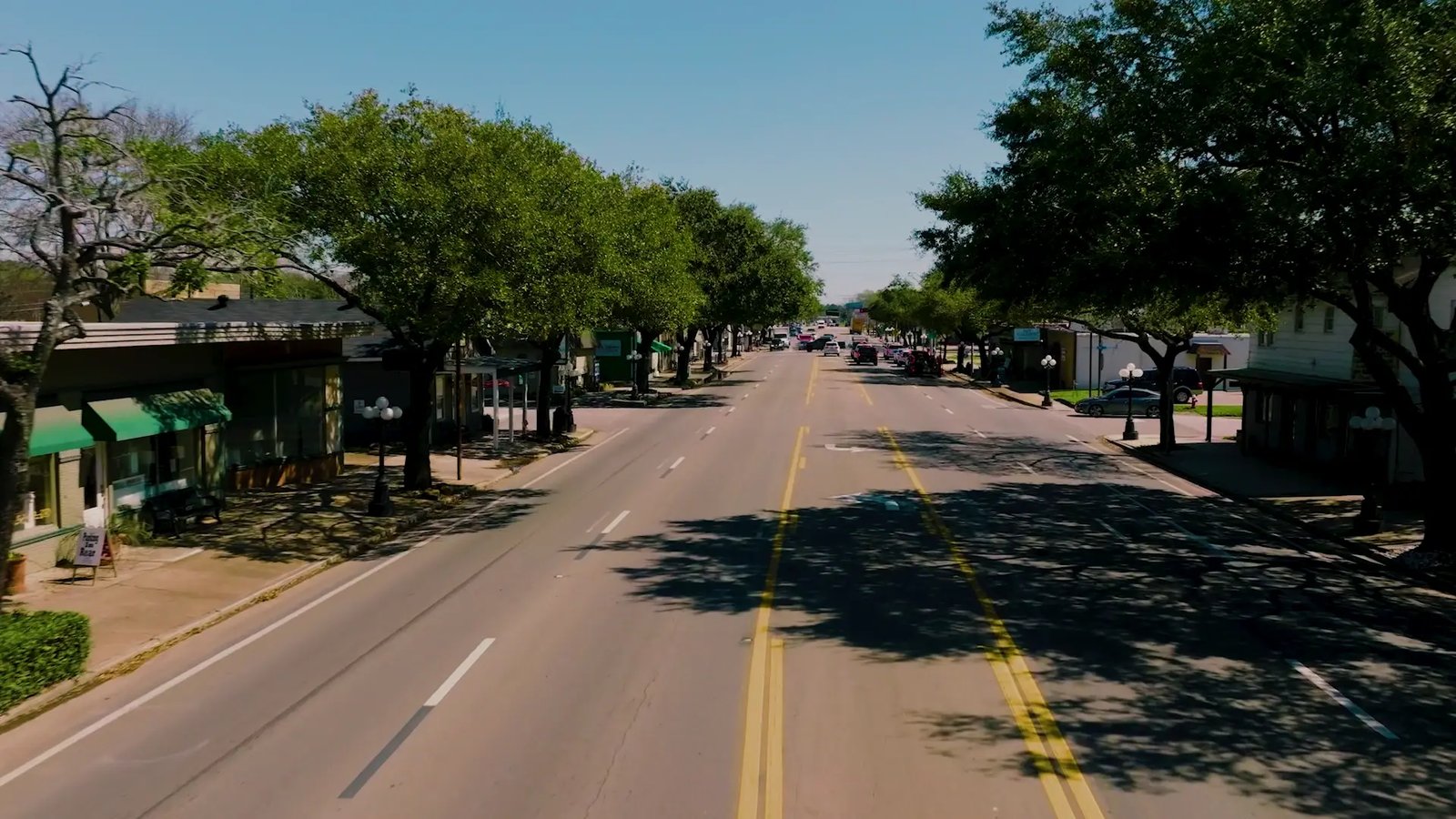
The Handbook of Texas records that Tomball was renamed on December 2, 1907 for Thomas Henry Ball, who helped route the railroad to the community, and that it became a boomtown in 1933 when drillers struck oil west of town. The older part of the city grew around the rail line and is a different construction environment from the new corridor: older utilities, tighter streets and mixed-age buildings. Infill work there means careful coordination with neighbors, historic street patterns and the city's staff.
We run the two environments differently. On the corridor, scale and speed matter and we work from large staging yards. In the old town, we protect adjoining buildings, schedule deliveries in small windows and keep dust and noise low. Phased construction on occupied sites applies when a business stays open during the work.
Neighboring markets
Owners at this crossroads often consider nearby submarkets as well. The notes for Spring and Cypress describe the same northwest growth pattern, and our page for commercial real estate developers sets out how we approach speculative projects.
Bring the pad plan and the opening date
Send us the site plan, your leasing targets and your date. We will return a phased budget with site work allocated by pad.
Common Questions
How do you handle a driveway onto a state highway?
A state road driveway needs a permit from the transportation department, with its own geometry and drainage review. We start the application early because it can take longer than the city permit. The department's future widening plans may also influence the design.
Should I build retail pads before the main tenant opens?
It depends on the lease terms and the market. Pad tenants often want to open with or after the main tenant. We can phase the site so pads are delivered in the order that serves your leasing plan.
How big should detention be for a large retail site?
Detention is set by the drainage rules of the governing agency and the engineer's calculation. On a large paved site it can occupy a meaningful share of the land. Design it early because it affects the pad layout.
What delays do tenants cause on a shopping center?
Late tenant plans, unfinished utility connections and changes to storefront details are common. We reserve time for each and track tenant deliverables in the master schedule.
Can a large industrial building be built in phases?
Yes. Many parks allow one building at a time, and infrastructure can be installed once for all phases. This reduces carrying cost, and we can show you the phasing options.