
General Contracting Services
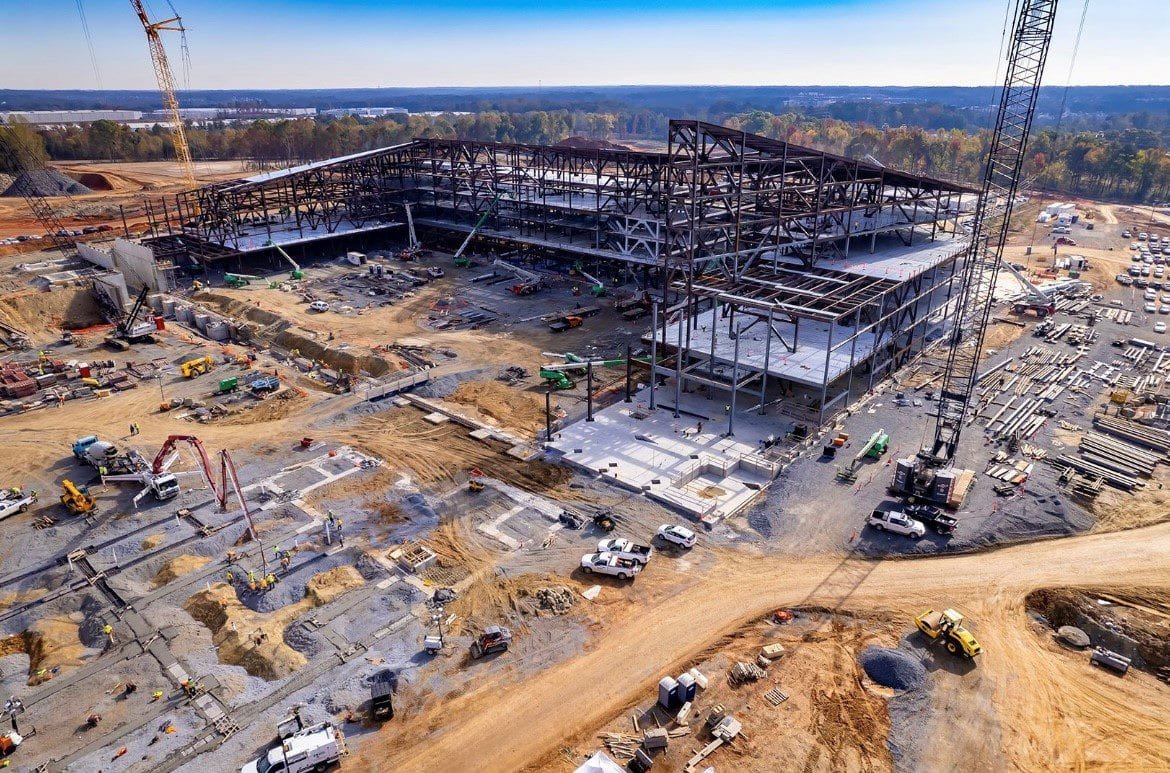
Structural Steel Erection in Houston
Steel is the one material that arrives on a truck schedule and leaves no room for argument with the weather. Structural members are fabricated weeks before they are needed, delivered in the order the crane will pick them, and set against foundations that must already be surveyed to a fraction of an inch. When any of those links slips, the crew standing on the deck is the expensive part.
Around Houston, that discipline is tested constantly. Rail-served parks in Baytown, a 232-acre business park near the Bayport container terminal, new industrial phases fronting Beltway 8 in Pasadena and a growing list of Fort Bend sites all use structural steel in some form, whether as the full frame of a high-bay building or the roof structure behind tilt-wall panels.
This page lays out how we manage erection: coordination with the fabricator, the survey and foundation checks that come first, crane and lay-down planning, bolting and welding sequences, and the safety discipline a Gulf Coast site demands.
Erection starts at the foundation, not the crane
Steel only goes up as accurately as the concrete below it. Before a single column is set, we survey every anchor bolt and rod group for location, projection and elevation and compare it to the shop drawings. A bolt group that is off by an inch is a field correction that costs a day and sometimes a change order, and we would rather find it on a quiet morning than with the crane booked.
We then prepare a detailed erection plan covering pick sequence, bracing, temporary guying, bolting order and plumbing-up. That plan is built with the fabricator, so that shipments arrive marked and ordered the way we intend to set them. It is more work than simply asking for steel to be sent when ready, and it saves far more in crane time than it costs in coordination. For a building that will carry a runway, our crane building work adds tolerance survey and alignment checks to this same process.
Heights, heat and a crane over a busy site
Erection is high-risk work: falls, dropped objects, unstable members and overhead loads. We plan fall protection from the first column, with controlled decking zones, tie-off points and drop-zone barricades, and we do not allow lifting over occupied or adjacent work areas. Pre-lift meetings are brief and specific, covering weights, radii, ground bearing and who is signaling.
The Gulf Coast adds heat and wind. Summer afternoons demand hydration, rest and earlier starts, and gusts that are manageable at ground level can make a long piece unsafe overhead. We set wind limits for picks in advance and hold to them. On sites next to operating facilities, such as the sprawling refinery and chemical complexes around Baytown that employ thousands of contract personnel on any given day, we also follow the neighboring operator's access, badging and permit-to-work rules in addition to our own.
What steel scope looks like on a metro project
Structural steel covers columns, beams, joists, joist girders, bracing, metal deck, stairs, platforms, handrails and miscellaneous items such as ladders, lintels and embeds. On tilt-wall buildings the roof framing ties into the panels through embedded plates, so the steel and concrete scopes must share a single set of coordination drawings. On pre-engineered buildings, the frame arrives as a package and the erection scope focuses on rigid frame assembly and secondary members.
We manage steel erection for new warehouses, distribution centers, plants and multi-story commercial buildings, and we also handle mezzanines, equipment platforms and structural additions to existing buildings. Retrofits require their own care, with existing conditions surveyed and temporary shoring planned before any cutting begins. When a project has both framed and panelized elements, our pre-engineered metal buildings and tilt-wall construction teams plan the handoffs together.
Fabrication lead times and lay-down space
Fabrication slots, mill orders and shop drawing approval time decide the date steel can start, so we get structural drawings and connection details into review early. In a busy market, a fabricator may need months from release to delivery, particularly for heavy sections or complex connections. We carry that lead time as an explicit activity and track it with the same attention as the permit.
On site, lay-down space often limits productivity. Tight urban parcels near the Texas Medical Center or downtown need just-in-time deliveries and street closures, while wide-open sites in the Fort Bend and Waller counties allow staged inventory but need all-weather access. After heavy rain, clay lay-down yards turn to paste, so we build a gravel or stabilized pad under the stack and keep delivery trucks off wet subgrades. These choices are cheap to make before the first load arrives and hard to fix afterwards. Our long-lead procurement service handles the paper trail.
Why Houston steel work has its own rhythm
The metro has one of the country's deepest industrial and energy workforces, which means skilled iron workers, welders and riggers are available, and also that they are in demand whenever a plant turnaround or a large warehouse program is underway. Port Houston reported handling 4.3 million TEUs in 2025 and has $2.1 billion in landside investment planned, so freight-related steel demand is likely to persist.
That competition for labor and crane time rewards early commitment. We reserve erection crews and cranes during preconstruction for projects with firm dates, and we avoid promising starts we cannot support. Owners in logistics and distribution and manufacturing who are planning multiple buildings benefit most from a standing relationship, because a crew that has just finished one building can move to the next without remobilizing.
Confirm the steel window
Send us the structural drawings and the target start. We will confirm the fabrication window, the crane and lay-down plan and the foundation checks that must be complete before the first column goes up.
Common Questions
How accurate do foundations need to be before steel arrives?
Anchor bolts and rods typically need to land within a small fraction of an inch of their drawn positions, and base plate elevations within a similarly tight tolerance. We survey them after the concrete cures and before the fabricator ships, and we correct any problem while the schedule still has room.
What lead time should I expect for structural steel in Houston?
It varies with the market and the size of the order, but owners should plan on several weeks to a few months from approved shop drawings to delivery. Heavy sections, special connections and crane runway girders take longer. We obtain a written fabricator schedule during preconstruction and carry it in your baseline.
Can steel erection continue in rain?
Light rain usually does not stop erection if footing and decking are safe, but lightning, high wind and standing water do. We set stop criteria in advance, shift crews to bolting or punch work when picks are unsafe, and keep wet-weather access to the laydown area open.
Who is responsible for steel shop drawings and connection design?
The fabricator or its engineer normally prepares the shop drawings and connection design under the engineer of record's direction. We coordinate their submittals with architectural, civil and mechanical drawings, so openings, embeds and loads are not discovered during erection.
Do you erect steel for tilt-wall buildings or only full frames?
Both. On tilt-wall buildings the roof joists, girders and deck tie into the panels, and the timing of panel stand and roof steel is a key sequence. On full frames we manage the entire erection.