
Building Types
Truck Terminals and Cross-Dock Buildings in Houston
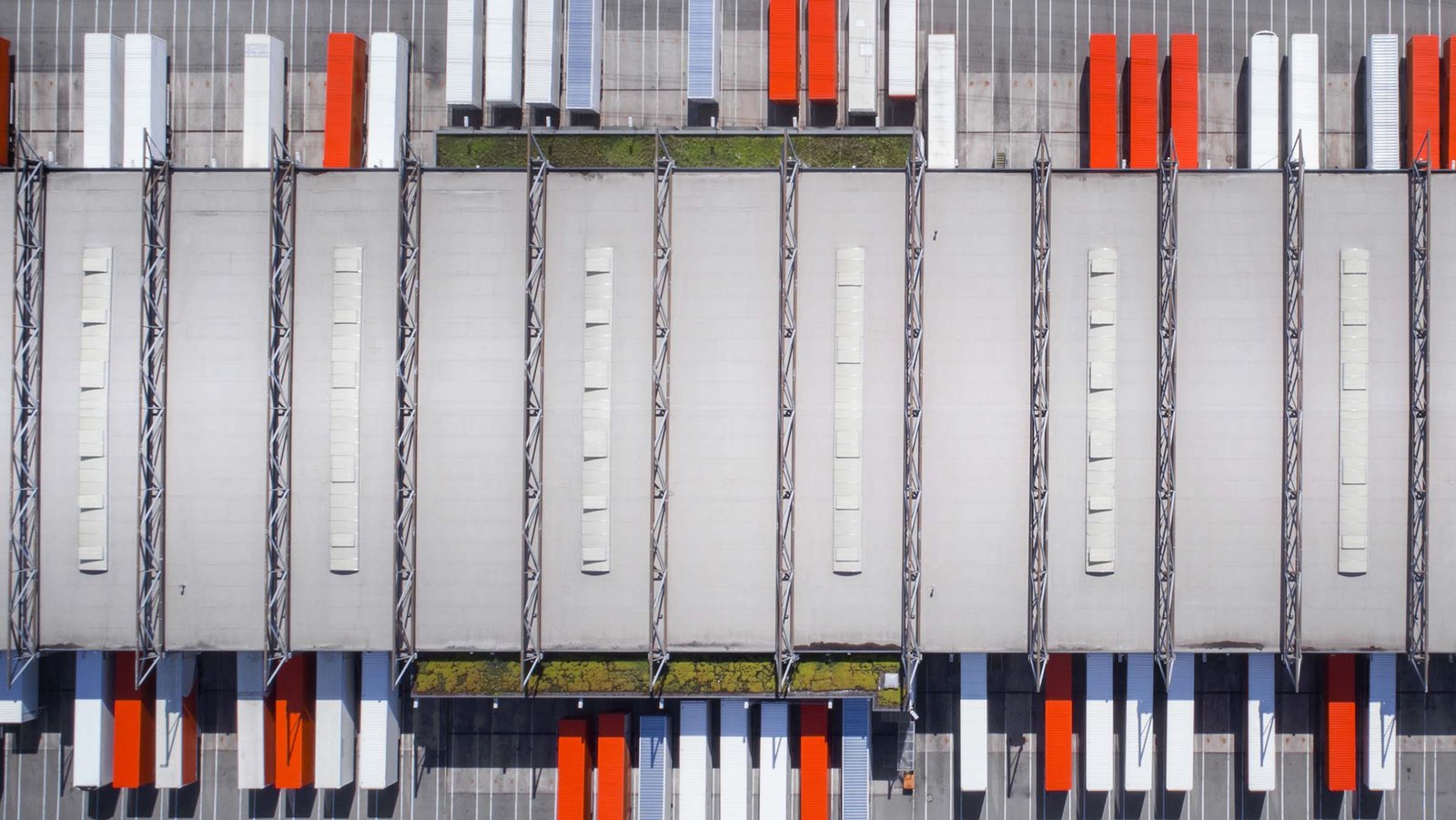
A motor freight service center on 25 acres in Conroe Park North tells you what a terminal needs before the building does: land, and a lot of it, mostly for trucks. A cross-dock or truck terminal is a long, narrow building with doors on both sides, surrounded by pavement that has to carry a very large number of heavy wheel passes every day. The structure is simple. The yard is the engineering project.
Terminal operators run on turn times. Trailers come in, are unloaded, sorted and reloaded within hours, and any delay ripples through a network. That makes the dock layout, the pavement design and the approach from the highway the main drivers of a terminal's performance, and they are the elements we focus on most in preconstruction.
This page explains how we plan and build truck terminals and cross-dock buildings in the Houston market.
A terminal is a yard with a building attached
The building is often a narrow rectangle with doors on both long sides, sometimes with an office wing and a maintenance shop. Typical features include a high door count, dock levelers or edge-of-dock devices, canopy or overhang protection, interior lighting suited to night operations and a sprinkler system matched to the freight. We frequently build these in pre-engineered metal or tilt-wall, depending on the operator's standards and budget.
The yard carries the real scope. Concrete aprons at the dock face, heavy-duty pavement for the maneuvering area, a drive aisle that separates inbound and outbound flows, truck parking, fueling and wash areas, scales, security and gate controls, and stormwater collection all have to fit together. We start from the largest trailer the operator expects and draw its path through the gate, around the building and back out, then check the paving thickness and joint pattern against the number of passes per day. A yard built on soft clay without a treated subbase will rut and pond within a couple of seasons. Our truck courts and dock aprons work covers the paving. Reinforced concrete at the dock and in the turning areas resists the rutting and shoving that asphalt suffers under heavy, slow-moving trailers.
Keeping trucks, forklifts and people apart
A busy terminal is one of the more hazardous work environments for the people who use it, and design can reduce the risk. We plan separate routes for pedestrians, forklifts and trucks where possible, provide marked crossings and lighting, and place employee parking away from the main truck flow. At the dock, edge guards, wheel chocks or vehicle restraints, and good lighting help prevent trailer creep and falls.
During construction the risk is the traffic itself. If an existing terminal is expanding while it operates, we coordinate with the operator on temporary routes and construction fencing, and we keep our haul traffic separate from the freight flow. In the sun and heat of a Houston summer, we also manage heat stress on paving crews, who work on hot surfaces for long hours.
Freeway access and flood-prone approaches
Terminal sites follow the road network. Beltway 8, which is described as an 88-mile loop around Houston lying entirely within Harris County, gives operators a way to reach most of the metro without crossing downtown, and it is a natural location for service centers. Our Beltway 8 and Sam Houston Tollway industrial corridor page covers that area. Further out, rail-served parks and the port-adjacent districts provide cheaper land and larger parcels.
Access has to hold up in a storm. The National Weather Service reported that portions of Beltway 8, I-45, US 59, I-10 and SH 6 were inundated during Hurricane Harvey, so a terminal operator should ask which approaches stay open and whether the site itself floods. We raise the yard grades and the dock elevation to the flood level required by the permit authority, and we look carefully at where the exit drains. The Conroe Park North page describes an inland alternative.
Drayage and container-related terminals have their own geography. The Bayport Container Terminal complex includes a 123-acre intermodal facility alongside its container yard, and operators serving that traffic want land within a short haul of the terminal gates. Those parcels tend to sit in the Pasadena, Bayport and Beltway 8 area, where detention and floodplain rules decide how much of a site is usable. We run a quick feasibility check of door count, yard depth and detention against a parcel so an operator knows early whether the layout fits.
Pavement curing and the opening date
Heavy concrete paving sets the schedule for a terminal. Subgrade preparation, base placement, reinforcement, pours and curing take longer than most owners expect, and the pour windows between storms matter. We schedule the paving in sections so that part of the yard can open while the rest cures, and we place the dock aprons early so that the building can be completed on a finished pad.
Gate, fuel, scale and security equipment need power and data from the utility and from low-voltage vendors. We set up those dependencies in the schedule, and we coordinate with the fire marshal on access and hydrant coverage. If the operator needs to begin using the terminal in phases, we plan utilities and drainage accordingly.
Related work for terminal owners
Terminal owners usually need more than a building. Parking lot construction covers employee and trailer parking, stormwater drainage handles the runoff from acres of pavement, and logistics operators that also run a nearby distribution center often need us to roll out several sites on one specification.
Send us the door count and the truck mix
Give us the number of doors, the trailer types and the daily truck count, and we will test them against your parcel. General Contractors of Houston will return a layout and a paving budget so you can see what the yard costs before the building.
Common Questions
Concrete or asphalt for a truck yard?
Concrete is common at the dock face and in the turning and queuing areas, where trailers load the pavement slowly and in the same spots. Asphalt can serve lighter traffic areas. The decision depends on volume, subgrade and life-cycle cost, and we price both.
How many acres does a terminal need?
More than the building suggests. The building may take a small share of the site, with the rest going to trailer parking, maneuvering, detention and employee parking. As a reference, one motor freight service center in Conroe Park North sits on 25 acres.
What if my site floods?
We raise the yard and dock to the elevation the permit authority requires and make sure the drainage and the exit routes work during a storm. Harvey inundated parts of Beltway 8 and other major roads, so we also discuss alternate routes with the operator.
Can we build in phases while operating?
Yes, with separated routes and a clear phasing plan. We coordinate shutdowns for tie-ins, keep our traffic away from freight flow and protect the operating area.
How long does yard paving take?
It depends on size, soil and weather, but it is often the longest activity on the schedule. Pours need dry windows, and curing takes time before heavy loads. We sequence the work in sections to open the yard progressively.