
Service Areas
General Contractor at the Mainline Texas Industrial Park
Shippers who want track, trucks and a building that work together on one parcel need a contractor who can read a rail plan as fluently as a site plan, and the Mainline Texas Industrial Park is the kind of ground where that skill pays. We plan large industrial shells with the railroad's loading geometry in mind: where the track curves, how far a switch lead needs to run, and how truck circulation crosses or avoids the spur.
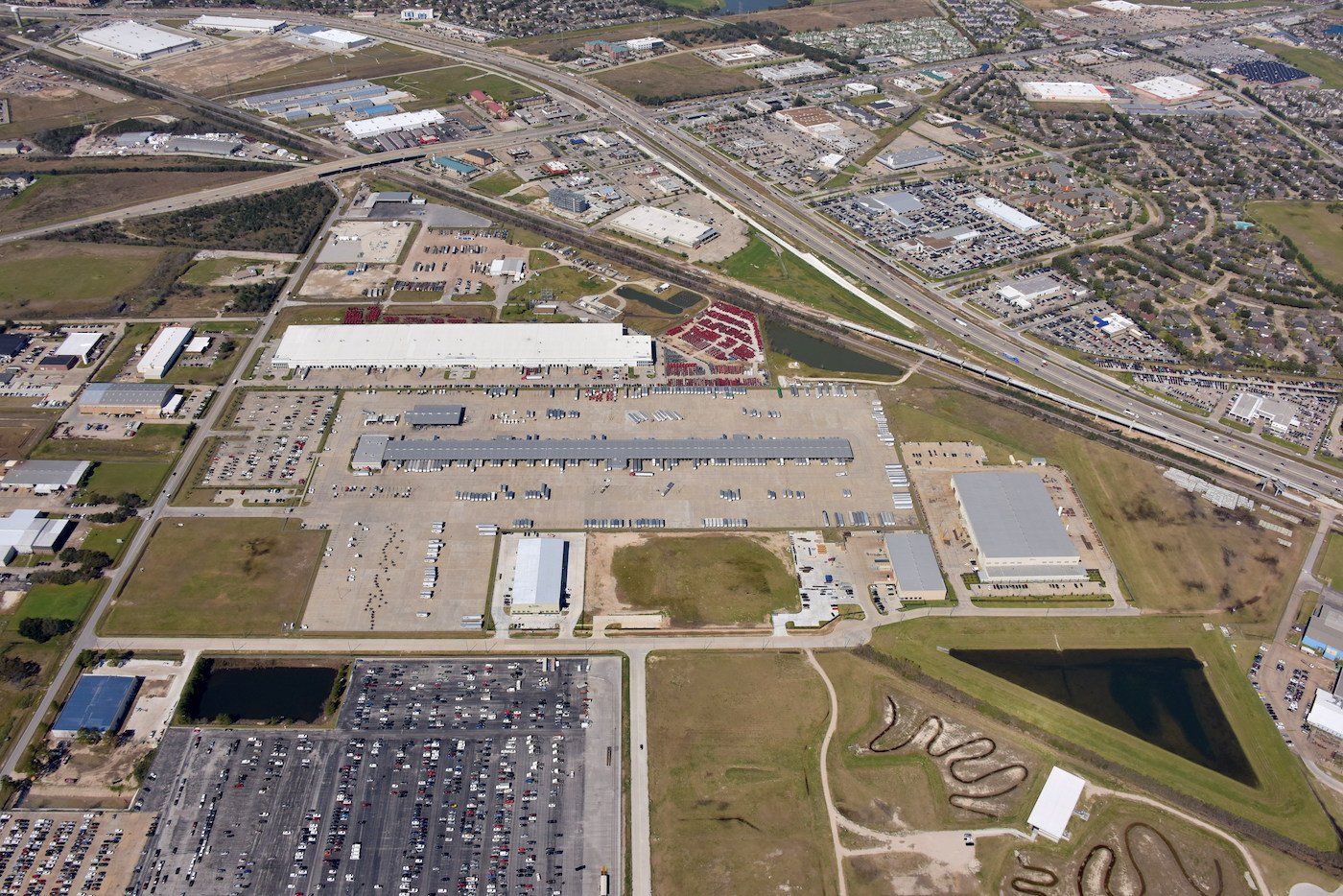
Covering Katy News reported on December 26, 2025 that Union Pacific is developing the 2,040-acre park in Rosenberg's extraterritorial jurisdiction, about 38 miles southwest of downtown Houston, with up to 20 million square feet of potential commercial development and about 1,300 acres of rail-served land. Trains.com reported on December 17, 2025 that the park is bordered on one side by the main line of the Glidden Subdivision and parallel U.S. Route 90, and on another by State Route 36, with nearby access to Interstate 69. Plans of that size change over time, so we treat project descriptions as a market signal and rely on the actual parcel documents when we price.
What we bring is the practical side: warehouse construction, mass grading and utilities, and the concrete that carries rail-served docks and heavy truck courts. We coordinate equipment and field sequencing to start a big pad and finish it without letting the schedule drift.
Jurisdiction in an extraterritorial area
The park lies in the extraterritorial jurisdiction of Rosenberg, which affects who reviews what. A city's ETJ often means the city regulates subdivision and platting while the county handles roads, drainage and sometimes floodplain, and the details differ by agreement. Before any design money is spent we ask the city and the county which permits apply, which agency inspects, and which fire code edition governs, and we write the answers into the project baseline.
Texas has no single statewide commercial building code edition, so the adopted edition depends on the jurisdiction, and we confirm it in writing. The same applies to energy code and accessibility review: the State Energy Conservation Office sets the energy code for commercial construction, and projects of $50,000 or more need a Texas Accessibility Standards submittal. Catching these items early keeps the permit on schedule.
From raw pad to rail-ready building
A rail-served industrial project starts well before the building. Stripping, clearing, bulk earthwork, detention, roads and utilities consume months, and the track layout must be coordinated with a railroad's engineering and operating departments. We run site development and utilities as part of the building contract so the earthwork contractor and the structure contractor do not hand each other problems.
Once the pad is delivered, the building follows the usual pattern: footings, slab, tilt-wall or steel framing, roof, dock equipment and paving. Rail-served docks sit at a different height from truck docks and often need separate door types and seals, so we sort the dock mix with the operator during design. A truck terminal or cross-dock in the same park may have still different needs, with more door positions, a deeper yard and little interest in the track at all, so the first design meeting is about how the freight will actually arrive and leave.
Why the geography works
The park sits along the Union Pacific main line with direct access to U.S. 90, Highway 36, Spur 10 and Interstate 69, is about a mile west of Rosenberg, and is 55 miles from Bush Airport and 66 miles from the Port of Houston, according to Covering Katy News. A user weighing the park against sites closer in should do the drive-time math for their own freight. Those distances are longer than the beltway districts, but land is more plentiful here and rail access is direct.
That trade-off suits some users and not others. A shipper moving bulk or containerized freight by rail may value the track more than a short truck haul to the port. A regional distributor that relies on parcel and last-mile delivery may want a site closer to its customers. We can show how the park compares with the Beltway 8 industrial corridor and describe the typical build cost differences honestly.
Phasing a very large site
Sites with 1,300 rail-served acres are developed in phases, and each phase has its own utilities, detention and track. We help owners decide what to build first and what to defer. Starting with a rail-served user that needs the track corridor can fund the roads and utilities that later phases rely on.
We also plan early works as separate packages: grading, detention ponds, roads and utilities can start while building design is still being finished. That overlap saves months and lets the owner demonstrate progress to prospective tenants. Our long-lead procurement process handles switchgear, rail turnouts and dock equipment, all of which have lead times that can run longer than the earthwork.
Working near an active main line
Anyone working next to an active railroad needs railroad-specific safety training and a flagging plan. Equipment must stay clear of the track envelope, and any crossing of the right-of-way requires the railroad's permission and often its flagmen. We include those requirements in the schedule and the budget, and we assign a safety lead who knows the railroad's rules.
Heavy trucks, concrete deliveries and cranes in a large open site create their own hazards. Traffic control, speed limits, spotters and a clear separation between pedestrians and vehicles keep the site manageable. For related markets, see our notes for Rosenberg and Richmond and the Hempstead, Brookshire and Waller corridor, and our guidance for logistics and distribution owners.
Bring the rail plan and the building program
Share the parcel, the track requirement and the building size. We will outline site work, building and rail interface costs in one proposal.
Common Questions
What does an extraterritorial location mean for permits?
It means the nearby city and the county may each have a role, and the split differs by agreement. We ask both which permits and inspections apply before drawings are finalized. Getting that in writing early prevents conflicting comments late.
How is a rail-served dock different from a truck dock?
Rail docks sit at a different height from truck docks, use different door and seal types, and need a covered or protected approach in some cases. They also depend on track geometry that the railroad must approve. We resolve these items with the tenant and the railroad during design.
Can I build before the full park infrastructure is complete?
Possibly, if the phase you occupy has roads, utilities and detention in place or included in your scope. We help you compare building in an early phase with waiting for later infrastructure.
Is a speculative building sensible in a park this size?
It can be, with a flexible shell and expansion options. The owner needs to decide how much dock, power and sprinkler capacity to include before leasing. We provide alternates so the choice is quantified.
How do you manage truck traffic during construction?
We plan haul routes, staging and wheel wash, schedule concrete deliveries to avoid conflicts and use spotters at crossings. A site this large lets us separate construction traffic from future operating routes.